Darius J. Wright has been leaving his body since he was a child, before he had words for it, back when he assumed everyone could do it. At 16 he made an ultimatum in the middle of the night — show me all things or I will figure it out anyway — and he was shown everything. Every question he had ever wanted to ask. The creation of this place, the beings placed here, the stars we came from. He was given the choice to stay there permanently and chose to come back, and he was told he would forget the details. He did. Then he spent the next decades traveling out of his body under conscious control, targeting future events, mapping the other side, and bringing the methods back so any of us can do what he does.
⠀
We spend an hour and a half going into all of it. Why sleep paralysis is a doorway rather than a trap. The three foundations of body, soul, and spirit. Why a spirit cannot touch a soul. The egregores we are all swimming in and how to break them. The 12 realms of creation he has mapped, with 13 kingdoms in each. Why Earth is actually the center of this creation. What he saw inside the tunnels beneath the pyramids. The Minecraft PlayStation analogy that explains what this place actually is. His deck-of-cards analogy for time. The moment he saw an I-beam falling on a man walking to the gym and warned him in time. The dates already written on your body. The great war in the heavens that scattered the ancient civilizations. Why the ego is not something to destroy. And the mission statement he asks every student to read before they learn a single technique.
#DariusJWright #OutOfBodyExperience #12Realms #SleepParalysis #TheOtherSide #Ascension #RealityRevolution #BrianScott #TheRealityRevolution #AstralProjection #SpiritualAwakening #ConsciousnessShift #SpiritualWarfare #Egregores #Multidimensional
Out-of-body experiences, OBE, conscious astral travel, sleep paralysis, 12 realms of creation, 13 kingdoms, multidimensional reality, eternal soul, spirits, egregores, future self entanglement, time analogy, ancient civilizations, pyramids, Tartaria, global ascension, ego, global abundance.
why did the buddha summarize his awakening not in visions or miracles — but in a few lines about causality?
because he saw that the deepest mystery of life lies not in creation but in action — how the mind fabricates its own world through craving and choice. this talk explores how kamma (action) and causality truly work, and why the buddha’s discovery was both metaphysical and deeply practical.
in this video:
🔹 why the buddha focused on causality instead of metaphysics or divine creation
🔹 two levels of causality — immediate and delayed — and how they shape our present experience
🔹 why “past kamma” is just raw material, but present kamma shapes how we experience it
🔹 how feedback loops in the mind create suffering — and how mindfulness breaks them
🔹 the seed and field analogy: why we must choose carefully what we water
🔹 how freedom of choice leads to unconditioned freedom — using actions to go beyond action
🔹 the right attitude toward remorse, justice, and compassion under the law of kamma
☸️ key insight:
causality isn’t fatalism. the past gives conditions, but the present gives freedom. each moment of intention reshapes the field. by cultivating skillful causes, we can rise above old seeds and end the need to feed.
🧭 related suttas:
mn 135, sn 12.20–12.63, an 3.62, an 5.57, ud 5.3
🪷 when we see kamma clearly, we stop blaming fate and start training the mind. this is the buddha’s science of freedom — how simple causes, understood deeply, open the way to the end of suffering.
🙏 subscribe for clear, practical buddhism — cause and effect as a path to release.
Sure, I'd be happy to share the story of Suppabuddha the Leper—a poignant Buddhist tale from the Pali Canon that illustrates karma, redemption, and the transformative power of the Dhamma (teachings). It's drawn from the Kuṭṭhi Sutta in the Udana, set during the Buddha's time in ancient India. I'll retell it in narrative form for clarity.The Tale of Suppabuddha the LeperIn the ancient city of Rājagaha, nestled in the hills of what is now Bihar, India, lived a man named Suppabuddha. He was a wretched soul, afflicted with leprosy that twisted his body and isolated him from society. His skin was marred by sores, his limbs weakened, and he begged for scraps on the streets, shunned by all as an outcast. Once the son of a wealthy merchant, Suppabuddha's fall into misery was no accident of fate—it stemmed from a grave misdeed in a past life, which we'll uncover later.One day, word spread through the city that the Buddha was teaching at the Bamboo Grove, the Squirrels' Sanctuary, surrounded by a vast assembly of monks and laypeople. Suppabuddha, ever hungry, spotted the crowd from afar and shuffled toward it, his bell clanging to warn others of his approach. He hoped for alms—perhaps some rice or fruit being distributed. But as he drew near, he realized no food was being given; instead, the air hummed with the Buddha's words, a gentle voice weaving truths about life and liberation.Undeterred, Suppabuddha decided to stay. Because of his condition, he couldn't join the inner circle and sat on the outskirts, his ragged form a stark contrast to the serene gathering. The Buddha, with his boundless insight, scanned the assembly and saw Suppabuddha's potential—a mind ripe for awakening, untainted by the burdens of his body.Turning his teaching toward the leper, the Buddha began gradually, as a skilled physician treats a grave illness. First, he spoke of generosity and virtue, painting vivid pictures of heavenly realms earned through kind deeds. Suppabuddha listened, his heart stirring. Then came the stark truths: the fleeting pleasures of sensual desires, their hidden corruptions and degradations, and the pure joy of renunciation. The leper's mind softened, becoming clear and receptive, free from the five hindrances that cloud understanding.Finally, the Buddha unveiled the heart of the teaching—the Four Noble Truths: the truth of suffering (dukkha), its origin in craving, its cessation through letting go, and the Noble Eightfold Path to end it. In that moment, as the words sank in, Suppabuddha's eyes widened with realization. Right there, amid the dust and his pain, he attained the "dustless, stainless vision of the Dhamma": "Whatever is subject to origination is all subject to cessation." Doubt vanished; he had glimpsed the truth, crossed the stream of samsara, and become a stream-enterer (sotāpanna)—assured of enlightenment, free from rebirth in lower realms.Overjoyed, Suppabuddha rose, paid homage to the Buddha, and declared the Dhamma's magnificence: like righting what was overturned, revealing what was hidden, guiding the lost, or lighting a lamp in the dark. He took refuge in the Buddha, the Dhamma, and the Sangha, pledging himself as a lifelong lay follower. With a final bow and circumambulation, he departed, his steps lighter despite his afflictions.But tragedy struck swiftly. Not far from the grove, a cow with a suckling calf—frightened or enraged—charged at him. Suppabuddha had no chance; the beast trampled him to death.Word of the leper's demise reached the monks, who hurried to the Buddha, grief-stricken. "Lord, where has Suppabuddha gone? What is his destination?" they asked. The Buddha smiled serenely. "He was wise, friends, and practiced as I taught. With the first three fetters broken—self-view, doubt, and attachment to rites—he was a stream-winner, bound for full awakening. Reborn now among the devas of the Thirty-Three, he shines brighter than his peers in beauty and honor."Curious about his suffering, one monk pressed: "But why was he born so poor and leprous?" The Buddha revealed the karmic thread. In a previous life in Rājagaha, Suppabuddha had been a rich youth, son of a moneylender, en route to a pleasure garden. He spied Tagarasikhin, a solitary Private Buddha (a silent enlightened one who awakens alone but doesn't teach broadly), begging for alms. Arrogant and unseeing, the youth sneered, "What leper prowls like this?" He spat in disgust and turned his back.For that evil deed—born of aversion and disrespect—Suppabuddha endured eons in hellish realms, followed by rebirths of torment. The last remnants of that karma manifested as his leprous life. Yet, encountering the Buddha's Dhamma, he cultivated faith, virtue, learning, and wisdom, ripening wholesome fruits. Death was no end; it was a gateway to the heavens.Reflecting on this, the Buddha uttered a verse: As one with eyes, having energy, would avoid treacherous, uneven places, so a wise one, in the world of life, should avoid evil deeds.The Deeper LessonThis story underscores Buddhist themes: No suffering is random—it's the echo of past actions—but wisdom and the Dhamma can shatter karmic chains. Suppabuddha's quick awakening shows enlightenment is possible for anyone, regardless of circumstance, if the mind is open. It's a reminder to act with compassion, especially toward the afflicted, lest we sow seeds of our own downfall.If you'd like more details, variations from other texts, or how this ties into broader Jataka tales, just let me know!
/////
The Four Noble Truths are the foundational principles of Buddhism, which diagnose suffering, identify its cause, confirm it can cease, and prescribe a path to its end. They are: 1) life involves suffering, 2) suffering is caused by craving and ignorance, 3) suffering can be ended, and 4) the way to end suffering is by following the Noble Eightfold Path. This path involves ethical living, mental discipline, and wisdom. [1, 2, 3, 4, 5, 6, 7, 8]
1. The truth of suffering (dukkha)
What it is: Suffering, dissatisfaction, and impermanence are fundamental parts of the human experience. This includes obvious forms of pain like sickness and death, but also subtler forms of dissatisfaction that arise from the constant change in life. [1, 2, 8, 9, 10, 11, 12]
What it means: It is a diagnosis, not a pessimistic view. Recognizing suffering is the first step toward finding a solution. [2, 9, 13]
2. The truth of the origin of suffering (samudaya)
What it is: The cause of suffering is craving, attachment, and ignorance. We suffer because we cling to things that are impermanent, trying to maintain a sense of a permanent, separate self.
What it means: This points to the root cause of our distress: our own desires and misunderstanding of reality. [1, 2, 14]
3. The truth of the cessation of suffering (nirodha)
What it is: It is possible to end suffering. This state of liberation is known as nirvana or enlightenment, a state of freedom and peace.
What it means: Because suffering has a cause, it can also have an end. The possibility of a life free from suffering is real and attainable. [2, 5, 14]
4. The truth of the path to the cessation of suffering (magga) [1, 5, 15]
What it is: The way to end suffering is by following the Noble Eightfold Path. [1, 5]
What it means: This path provides the practical steps to end suffering. It is not a path of extremes but a "Middle Way" that combines ethical conduct, mental discipline, and the development of wisdom. The path includes: [2, 6, 8, 13, 16, 17, 18]
The religion of the Buddha is not a religion in the conventional sense because it lacks a system of faith, dogmas, and sacred texts. It does not believe in God, souls, or any kind of heaven. It does not require faith, yet it remains a religion. This is a unique phenomenon in the history of human consciousness.
No One Can Compare to the Buddha.
He said that God is merely a search for consolation, safety, a refuge. You believe in God not because there is a God, but because you feel vulnerable without that belief. Even if there were no God, you would invent one. That belief stems from your own weakness.
🌿 Why are we here? What is the meaning of existence? These timeless questions have haunted humanity for millennia. And more than 2,500 years ago, one man offered the clearest, most transformative answer ever given — the Buddha.
In this compelling exploration of the Buddha’s life and mission, we retrace his journey from royal comfort to spiritual awakening, his fearless renunciation of power and pleasure in pursuit of a deeper truth, and his discovery of the Middle Way — a path of profound insight, mental clarity, and ethical freedom.
Through stories like Kisagotami, the grieving mother, and Angulimala, the feared murderer turned monk, we witness how the Buddha’s wisdom was not just philosophy, but a living force of compassion and transformation.
🔍 This video reveals:
– Why the Buddha rejected metaphysical speculation and instead focused on the practical problem of suffering
– How his teaching remains universally relevant in a world flooded with confusion, anxiety, and distraction
– What makes the Dhamma radically empowering: no savior to worship, no doctrine to blindly follow — just insight, mindfulness, and ethical responsibility
🙏 Whether you're a long-time Buddhist practitioner or simply searching for clarity in a chaotic world, this teaching offers a timeless mirror to see yourself — and life — more truthfully.
💬 "Come and see for yourself," the Buddha said. This may be the most direct, most human explanation of existence ever shared.
📌 Don’t forget to like, comment, and subscribe if this message resonates with your heart.
The Buddha: The Real Purpose of Life? (Not What 99% Think)
Why do we live? What’s the ultimate goal of life?
Modern society says: “Be happy.” But what if that’s the very illusion keeping us stuck?
In this thought-provoking exploration, we follow the Buddha’s radical answer: Life’s true purpose is not to chase happiness, but to end suffering. Drawing on early Buddhist teachings, modern psychology, and real-world stories, we uncover:
Why even the rich & famous feel empty
How desire & pleasure fuel the cycle of discontent
What the Buddha saw under the Bodhi Tree: The Four Noble Truths
How the Eightfold Path frees us — not in theory, but here and now
Why freedom, not happiness, is the deepest form of fulfillment
From the illusion of the “happiness chase” to the liberating clarity of insight and letting go, this video invites you to pause — and reconsider everything.
🧘♂️ This isn’t a religious sermon — it’s a roadmap for inner peace.
🔔 Subscribe for more Buddhist reflections, mindfulness, and deep truths for modern life.
BATESVILLE, Miss. — Did you know there is a monastery right here in the Mid-South, attracting people from all over the world?
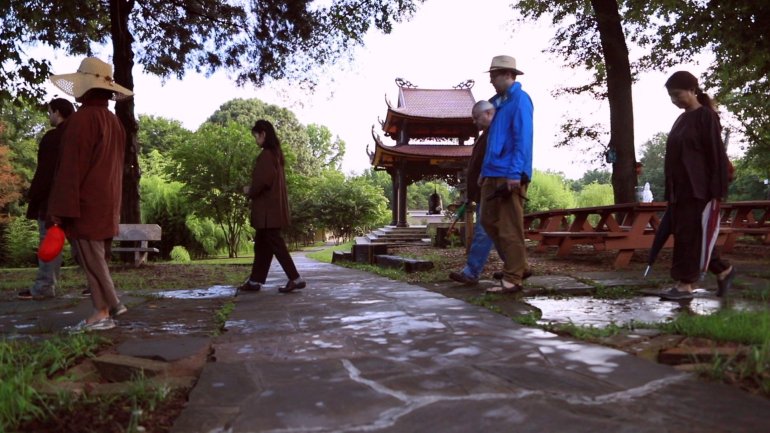
Tucked away in Panola County, Mississippi, about an hour and 15 minutes outside of Memphis, is a place of peace, a compassionate community where they start the day spending the morning in silence with their feet kissing the earth as the birds wake up.
“Just bringing our focus back to the feet, the Earth, the body and our surroundings,” explained Sister Tri Nghiem.
This is Magnolia Grove Monastery.
“If you’re looking for money this is not a place for you,” said Binh Ho, one of the monastery’s co-founders. “But if you’re looking for peace, if you’re looking to relieve a stress, this is the place for you.”
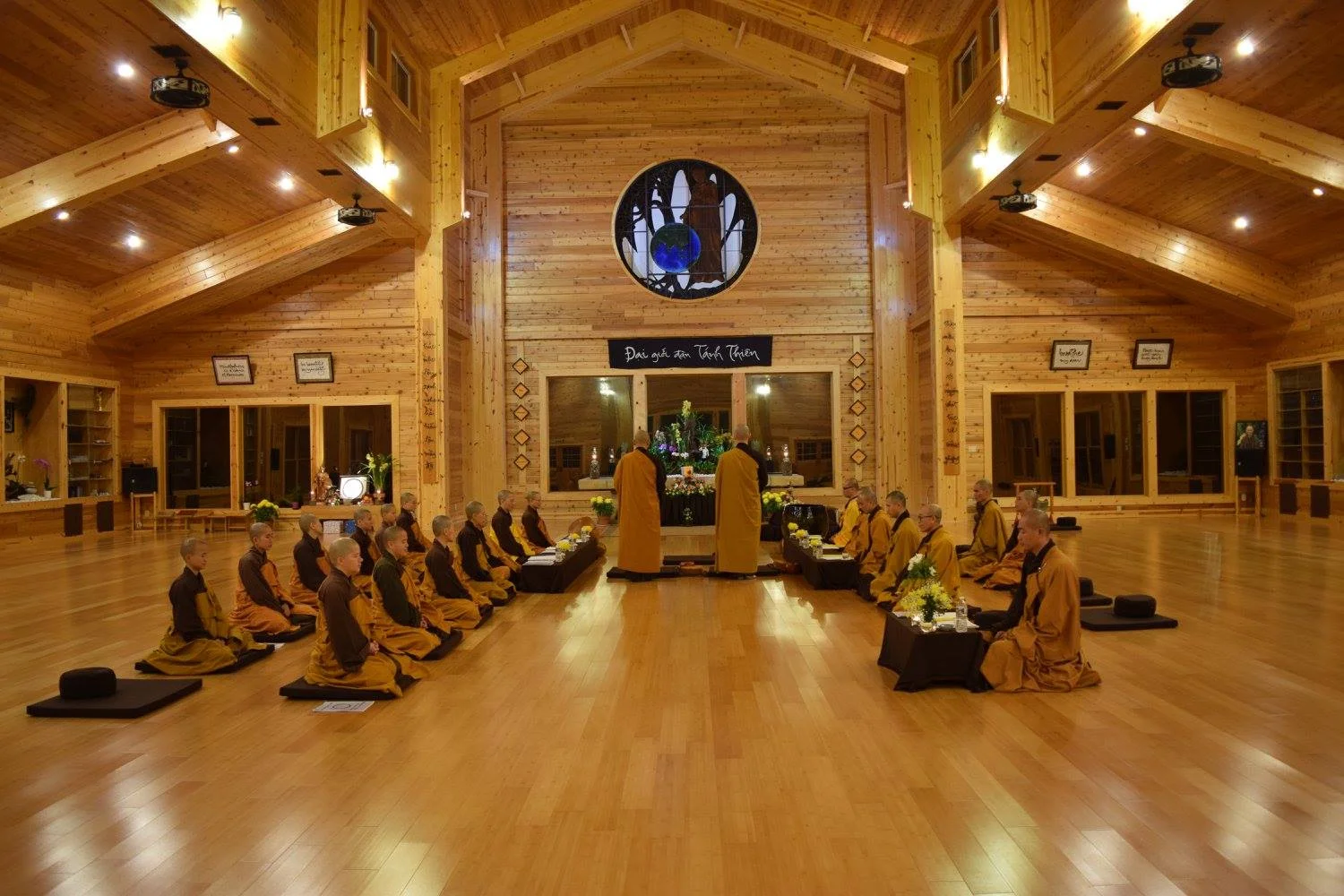
Twenty-eight monastics, brothers and sisters, live at Magnolia Grove Monastery in Panola County, Mississippi.
Twenty-eight monastics, brothers and sisters, live at the monastery. It’s is also a meditation practice center.
WREG was there for an Order of Interbeing retreat with those practicing the teachings of world-renowned spiritual leader and Nobel Peace Prize nominee Thich Nhat Hanh, a Buddhist monk and Zen Master known to those at the retreat as Thay, which is Vietnamese for teacher.
Thay’s Nobel Peace Prize nomination came from none other than Dr. Martin Luther King Jr. The two established a relationship during their protest of the Vietnam war.
“They had the same vision of a beloved community. In a world of people who can live in harmony,” said Sister Peace, who lives at the monastery.
Magnolia Grove monastery became a mindfulness practice center in 2005.
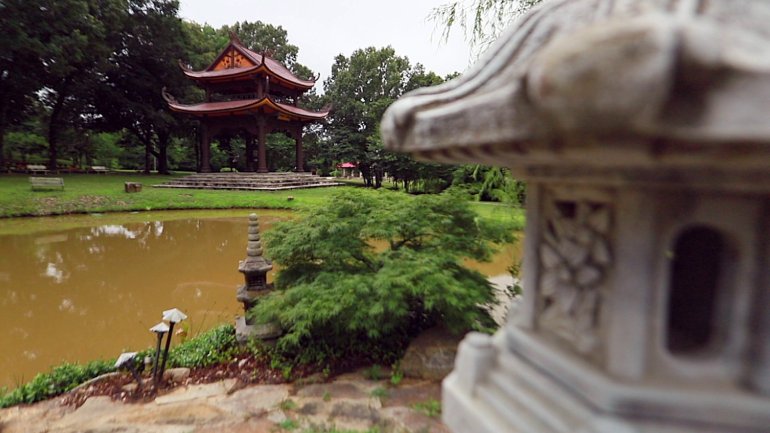
The more than 100 acres are home to monastics who farm most of their own food, but it can also host more than 100 people in guesthouses built by hand.
“We have seen mindfulness and meditation in New York and California, and to see it in Mississippi, that is something special,” Sister True Pearl said.
Sister True Pearl, 35, lives here.
“My family left Vietnam when I was 11 and we moved to Memphis, Tennessee and I went to Kingsbury High School,” she said.
She went to college, and in 2004 visited a monastery in California.
“I saw the simplicity of the way of living and I found out that simplicity can lead to happiness, which is something that is not commonly shared in America,” she said. “(In America) You must have a lot in order for you to be happy and well I didn’t see that in the monastics. The monastics didn’t have a lot but they were so happy. I could see it in their eyes, I could see it in their smiles and so I wanted to have that.”
Dr. Leslie Gordon calls Magnolia Grove “his second home.” The retired dentist lives in Memphis, but visits the monastery twice a month.
“There’s a lot of xenophobia going around right now and people are afraid to reach out to people that aren’t in their comfort zone,” Gordon said. “When you come here for retreat it doesn’t make any difference if you’re Buddhist or Catholic or if you study Islam.”
Monastics we spoke with say people visit the monastery from all over the world.
“When our minds worry, our bodies kind of tire too. So you need to balance it out,” Binh Ho explained.
Sister Tri Nghiem also lives at the monastery. Here, she says, they have “a lot of unlearning to do.”
“So recognizing those sort of habit energies within us, letting it go, and to do that, we practice stopping,” she said — stopping the running, stopping the thinking mind that is racing.
That reminder of balance comes in a simple form like a bell. The bell sounds during activities and every 15 minutes in the dining hall.
“We just stop what we’re doing, and we come back and breathe and relax, so it’s like a little mini-holiday and we just check in,” Sister Tri Nghiem explained.
They practice being mindful.
“Mindfulness is very simply the capacity to be aware and to be conscious. Very succinctly. Easier said than done, but doable,” said Sister Peace.
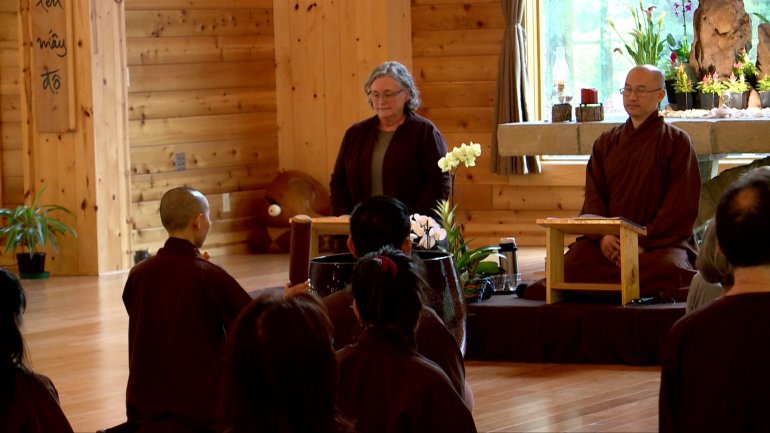
But a day at the monastery is not all silent. Peace and positivity are also spread through song and Dharma talks.
“Inspirational talks like this, plant positive seeds inside of us. Seeds of love and forgiveness, seeds of understanding. There’s no violence,” explained Sister True Pearl.
Those here have a bigger purpose to channel positive energy to others, not living a life of selfishness, and recognizing the good in the simpler things in our lives.
“Don’t seek for happiness. Happiness is here. We just have to open our eyes and see it,” said Sister True Pearl.
It’s a message they encourage everyone to embrace, and the monastery welcomes and encourages people from all backgrounds to visit.
Magnolia Grove Monastery is a residential monastery and mindfulness practice center in the tradition of Plum Village, founded by Zen Master Thich Nhat Hanh in 2005 in Batesville, Mississippi. Today, more than thirty monastic disciples of Thich Nhat Hanh are in residence.
Ten years ago, Magnolia Grove was little more than 120 acres purchased by a group of committed individuals and families. With hard work, dedication, and coordinated effort, our community created a large meditation hall with an adjoining commercial kitchen to feed participants, and built by hand a guesthouse to host 120 laypeople.
Magnolia Grove Monastery is a place to practice meditation and mindfulness. It is where every breath we take reminds us of the wonders of life. A place to sit and relax. A place to walk and kiss the earth beneath our feet. It is a place to rest under a willow tree on an island in a lotus pond. A place to eat together and savor every bite. A place to listen deeply to the sounds of life and the sound of our hearts. A place to work together to build a community of love and understanding.
Magnolia Grove is a place where we can stop running and discover peace with every step we take. A place to remind each one of us that the present moment is a wonderful moment.
Visit Magnolia Grove to register for retreats and learn more about the monastery.