Showing posts with label False History. Show all posts

9/01/2024

The 1893 Chicago World's Fair: The World's Columbian Exposition A Hidden History


Using A.I. to travel back in time: the World's Columbian Exposition, also known as the Chicago World's Fair, was a world's fair held in Chicago from May 5 to October 31, 1893, to celebrate the 400th anniversary of Christopher Columbus's arrival in the New World in 1492. The centerpiece of the Fair, held in Jackson Park, was a large water pool representing the voyage that Columbus took to the New World. Chicago won the right to host the fair over several competing cities, including New York City, Washington, D.C., and St. Louis. The exposition was an influential social and cultural event and had a profound effect on American architecture, the arts, American industrial optimism, and Chicago's image. The layout of the Chicago Columbian Exposition was predominantly designed by John Wellborn Root, Daniel Burnham, Frederick Law Olmsted, and Charles B. Atwood. It was the prototype of what Burnham and his colleagues thought a city should be. It was designed to follow Beaux-Arts principles of design, namely neoclassical architecture principles based on symmetry, balance, and splendor. The color of the material generally used to cover the buildings' façades, white staff, gave the fairgrounds its nickname, the White City. Many prominent architects designed its 14 "great buildings". Artists and musicians were featured in exhibits and many also made depictions and works of art inspired by the exposition. The exposition covered 690 acres (2.8 km2), featuring nearly 200 new but temporary buildings of predominantly neoclassical architecture, canals and lagoons, and people and cultures from 46 countries. More than 27 million people attended the exposition during its six-month run. Its scale and grandeur far exceeded the other world's fairs, and it became a symbol of emerging American exceptionalism, much in the same way that the Great Exhibition became a symbol of the Victorian era United Kingdom. Dedication ceremonies for the fair were held on October 21, 1892, but the fairgrounds were not actually opened to the public until May 1, 1893. The fair continued until October 30, 1893. In addition to recognizing the 400th anniversary of the "discovery of the New World" from the European perspective, the fair also served to show the world that Chicago had risen from the ashes of the Great Chicago Fire, which had destroyed much of the city in 1871. On October 9, 1893, the day designated as Chicago Day, the fair set a world record for outdoor event attendance, drawing 751,026 people. The debt for the fair was soon paid off with a check for $1.5 million (equivalent to $50.9 million in 2023). Chicago has commemorated the fair with one of the stars on its municipal flag.


The World's Fair Phenomena
During the 1800's and into the 1900's the phenomenon of World's Fairs and International Expositions appeared all over the world, leaving more questions than answers. Lysis (ˈlī-səs): the gradual decline of a disease process.


Absolutely, Buddy! Here’s a short story based on the transcript, incorporating the intriguing elements of the 1893 World’s Fair and the questions it raises about our history:


The Enigma of the 1893 World’s Fair: A Hidden History

More than 130 years ago, the city of Chicago, Illinois, hosted an event that seemed almost too grand to be real—the 1893 World’s Fair, also known as the Columbian Exposition. At the heart of this historical phenomenon was the ephemeral Metropolis known as the White City. Sprawling over 600 acres, the fairgrounds featured more than 200 monumental structures that defied imagination. The Manufacturers and Liberal Arts Building alone covered nearly 32 acres, with the capacity to fit four of the great Roman Coliseum inside and seat 300,000 people. Its vastness was almost incomprehensible.

One of the event’s most iconic images was the 65-foot golden statue of the Republic, gleaming in the sun and towering over the central lagoon of an elaborate canal system. Borrowing ideas from ancient Venice, visitors could traverse the fairgrounds in Venetian-style gondolas. Norway even sailed a full-sized replica of a Viking ship across the ocean to be put on display.

Approximately 27 million people from around the world were introduced to foods that have since become universally recognizable, such as peanut butter, Hershey’s chocolate, Pabst Blue Ribbon, Cracker Jacks, Juicy Fruit gum, and Vienna sausages. The integration of electrical power into nearly every aspect of our lives can, in many ways, be traced back to this event. The fairgrounds were illuminated by more than 100,000 incandescent light bulbs, a recently patented invention at the time. Technological marvels such as the first practical electric automobile and the first electric kitchen with an automatic dishwasher were also introduced.

The entertainment area brought to the public the concept of amusement parks with attractions, sideshows, international villages, and the first widespread use of souvenir merchandise like postcards, coins, and other memorabilia. Interestingly, spray paint and the concept of whitewashing can also be traced to the fair. The very first Ferris wheel was created for the event by bridge builder and steel magnate George Washington Gale Ferris Jr. At 264 feet tall, his wheel could accommodate 2,160 people at a time and offered panoramic views of the entire fairgrounds.

As we delve deeper into the World’s Fair events, a pattern begins to emerge—one that seems to defy the conventional history we’ve all been taught. In cities all over the world, we consistently see the same grand and ornate structures, civil engineering, and infrastructure projects being constructed on a colossal scale within an impossible time frame. Less than 30 years after the Civil War, cities like Chicago looked as if they could be part of Vatican City or anywhere else in Old World Europe. Yet, we’re told that everything was built using wood, plaster, and temporary materials with the intention of demolishing them when the fair ended.

However, some isolated buildings still stand today because they were constructed with permanent materials. Everything else was destroyed, but we get a glimpse of the craftsmanship involved through structures like the Art Institute of Chicago and the Museum of Science and Industry. In Chicago’s case, the majority of the fairgrounds didn’t need to be demolished because they were conveniently destroyed by fire a few months after the event ended.

Why were certain buildings constructed from permanent materials, and why did they so often hold the title of the world’s largest building at the time? It raises the question: how could the world’s largest buildings have been constructed using mostly temporary materials? Are we to believe that just over a century ago, people made a habit of building some of the largest, most magnificent, and ornate buildings ever seen, only to use them for a few months?

Even if we disregard the buildings themselves, the earthworks involved in these projects would challenge modern capabilities and equipment under such tight timelines. Most importantly, why would they do all of this just to destroy it? Could the World’s Fair events have been the perfect cover to hide the remnants of a unified global system that existed before the upheaval of the Civil War and two world wars reshaped our world?

The similarities between the narrative surrounding the fairs, the architecture, and the scale all seem to point to something more than coincidence. It suggests a carefully orchestrated erasure of a past we were never meant to remember. We have to ask ourselves: how much of our history has been rewritten, what has been lost, and how much has been hidden in plain sight?


This blog post was enhanced with research and information assistance provided by Microsoft Copilot, an AI-powered companion designed to support content creators with information gathering and content development.


///////

10/30/2021

STOLEN HISTORY (PARTS 1, 2, 3) A MUST SEE VIDEO!!!!


Stolen History Part 2 - The Destruction of the Old World

Stolen History Part 3 - The Mystery of the World's Fairs

The official version of human history is a construct of lies. We are in a state of collective amnesia. Let's free ourselves from the artificial matrix that has been imposed on us. This part covers the World's Fairs and the period in which they took place.

"I can't tell you exactly what year it is because we honestly don't know."
- Morpheus (Matrix, 1999)

The official version of human history is a construct of lies so we need to get rid of the artificial matrix that has been imposed on us.

https://stolenhistory.net

https://www.stolenhistory.org

https://mega.nz/folder/u1wDhYIA#vWx9vgbLjQAmbKQLuu4soA

List of videos from this channel
https://themediagiant.weebly.com


Erfundene Geschichte Teil 2 Die Zerstörung der alten Welt

Die offizielle Version der Menschheitsgeschichte ist ein Lügenkonstrukt. Wir befinden uns in einem Zustand der kollektiven Amnesie. Befreien wir uns von der künstlichen Matrix, die uns auferlegt wurde. Dieser Teil behandelt die gesellschaftlichen Folgen des Resets im 19. Jahrhundert. Themen:

- Kollektives Gedächtnis

- Industrialisierung

- Imperialismus

- Folgen der Industrialisierung 


Erfundene Geschichte Teil 3 - Das Mysterium der Weltausstellungen


Die offizielle Version der Menschheitsgeschichte ist ein Lügenkonstrukt. Wir befinden uns in einem Zustand der kollektiven Amnesie. Befreien wir uns von der künstlichen Matrix, die uns auferlegt wurde. Dieser Teil behandelt die Weltausstellungen und die Zeit, in der sie stattfanden.


The Genocide of Russia's Old Believers


From out of the Communist, industrialized urban centers, a confederate army of psychopaths, prisoners, atheists, and ready henchmen, marched into the Russian North in the Spring of 1923, to begin the greatest ethno-religious genocide in human history...


///////


6/28/2020

The privilege they erased from history


Our history is written by the victors. What presentation of our history would best suite their chosen 'end game' for us? The straight up erasing of true history has happened on the topic of slavery in America. Who gains and who is set to lose?


///////


3/09/2020

Old world order. World we lost. By: Global vision


Global vision YouTube Channel To Learn More!


Mysterious illuminations of the 18-19 centuries
In this article we are going to look closely into Illuminations – fancy entertaining events, held in past times during various celebrations. Such illuminations have been around for a long time, but it turns out that we know so little about them.

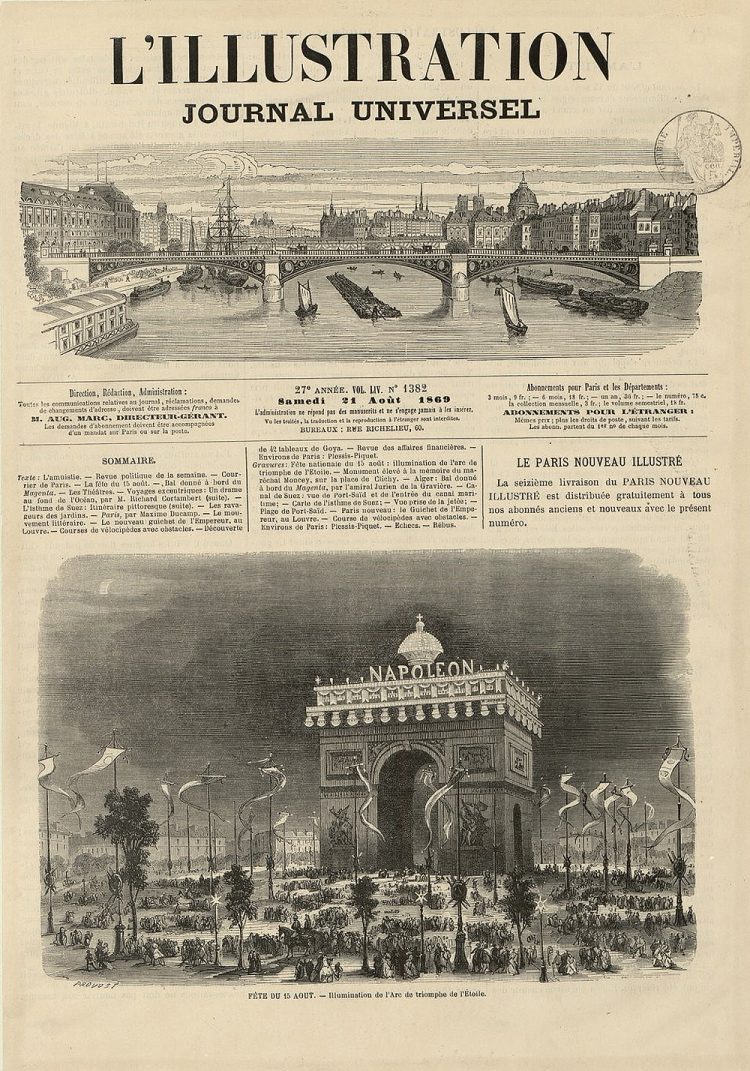
I know that am not the first one to touch upon this mystery. Nevertheless, I wanted to check it out myself by looking into some foreign sources. Based on what I saw and read, I can state that it is not that simple. All information that is one way or another related to the technical side of the illuminations is classified or destroyed. To get any information and content for the article I had to look for tabloid press of that time, like this:

READ MORE HERE:
https://www.tart-aria.info/en/mysterious-illuminations-of-the-18-19-centuries/

Mysterious illuminations of the 18-19 centuries tech_dancer

Luckily, it hasn’t been censored yet. However, such tabloids can give us only brief insight into the issue, without giving away any details, but at least, they give us a confirmation of the fact, that illuminations indeed existed, which is clearly seen in various graphical images. We may also conclude that all those illuminations were not a result of combustion.

Mysterious illuminations of the 18-19 centuries tech_dancer

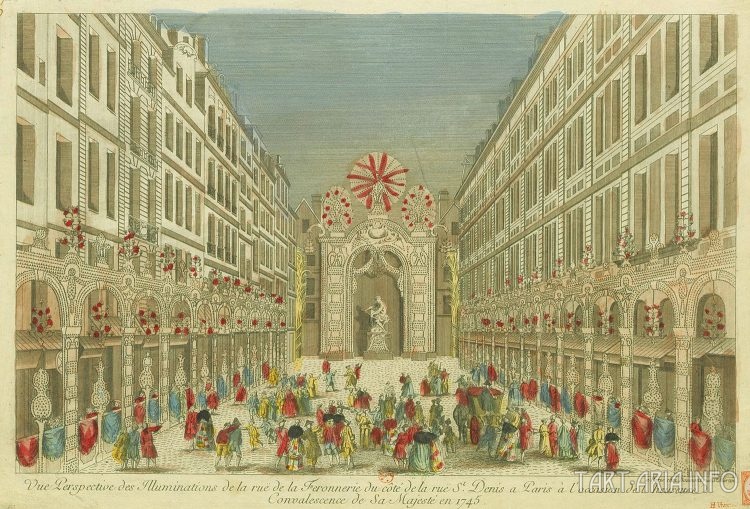
I get a strong feeling that someone has retouched this image, particularly the parts where columns are decorated with some kind of fairy lights. It is obvious that use of fire is out of question, otherwise everything would blaze up, while fires in those days were feared no less than the plague. Pay attention to the fact that the year was 1745 (Paris).

Mysterious illuminations of the 18-19 centuries tech_dancer
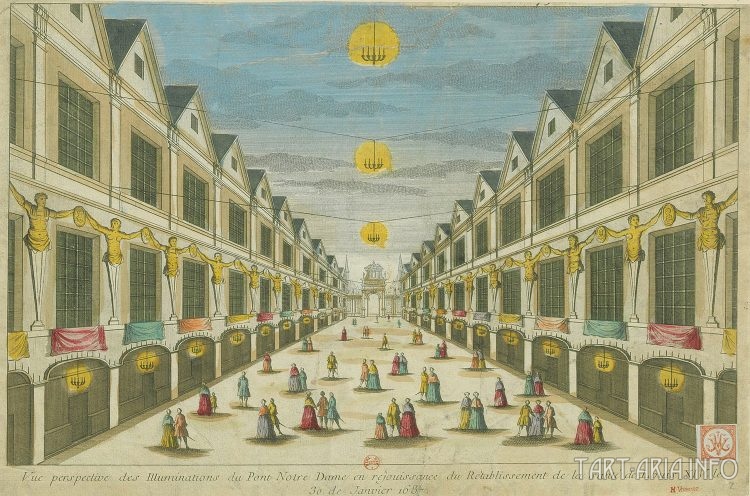
This image shows the same place, but in 1681.The lamps, hanging on the wires, evidently have not candles inside. The light they radiate is unusual, and looks like the whole lamp is glowing (instead of separate lights). What is it? An artist’s style? Let’s look at some other images.

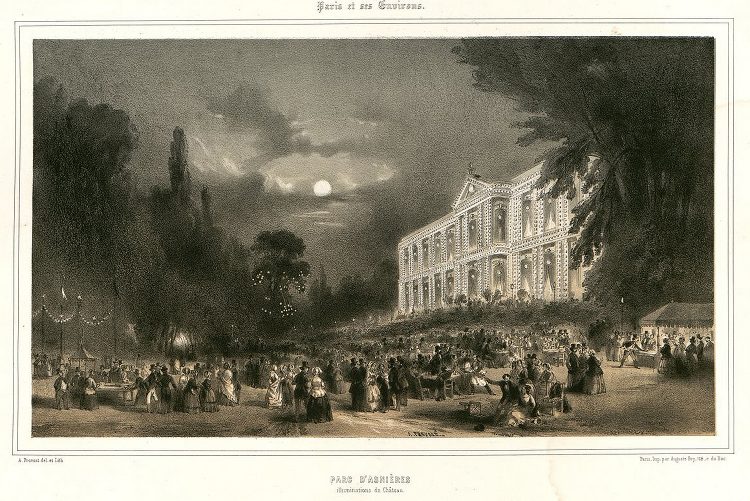
This is Paris at night. The building is clearly decorated with some balls. Something also hangs on the tree.

Mysterious illuminations of the 18-19 centuries tech_dancer
READ MORE HERE:

https://www.tart-aria.info/en/mysterious-illuminations-of-the-18-19-centuries/

///////


12/31/2018

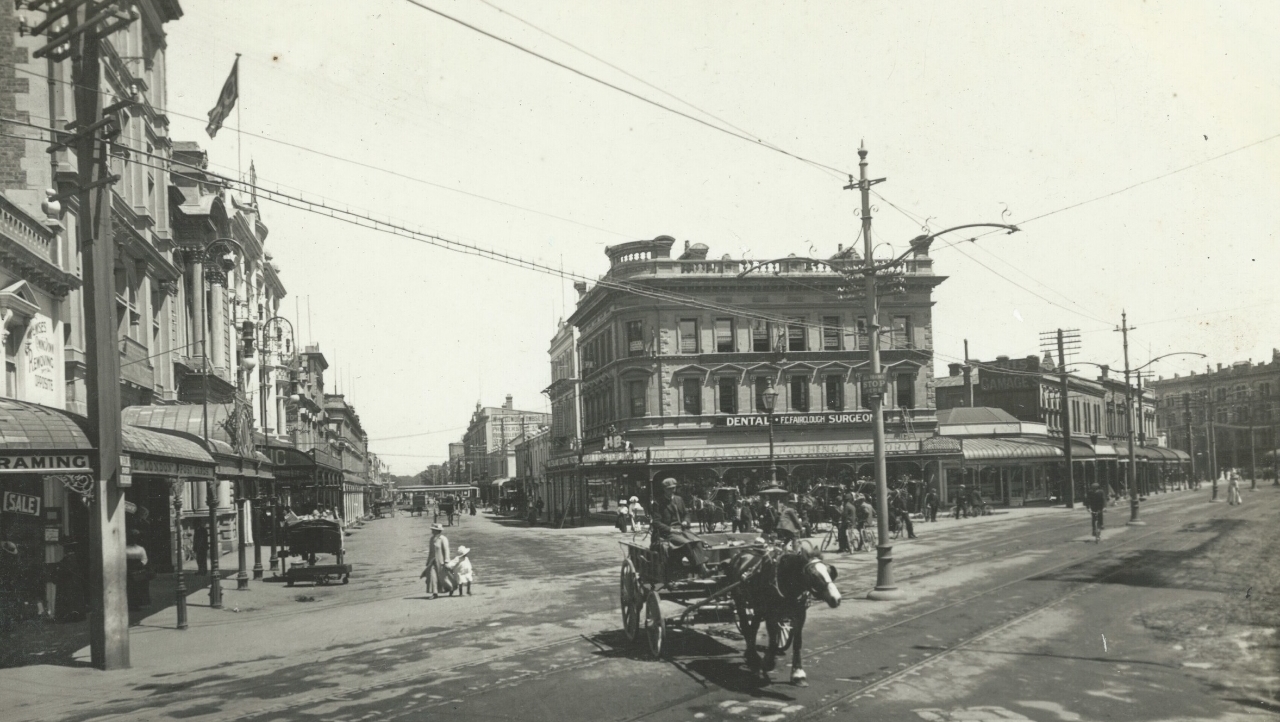
Hidden History Christchurch New Zealand, Built Up Already


From Antarctica to New Zealand, Here is the hidden history they’ve... well... hidden, until now.
It seems New Zealand was already built up with buildings and trains, etc. BEFORE the first settlers from England arrived in 1850.


Related image

Image result for Christchurch New Zealand,


Christchurch has gone through major changes since its foundation in 1850

Image result for Christchurch New Zealand, old photos

Related image

Cranmer Court, Christchurch, New Zealand

//////


12/25/2018

Statue of Hoaxery 🗽 Exposed | UAP Just Made This Up About The Statue of Liberty?


 UAP

OR UAP Just Made This Up About The Statue of Liberty?
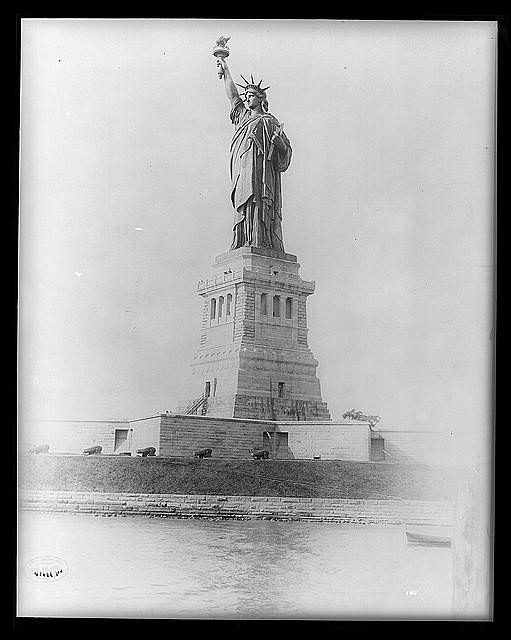
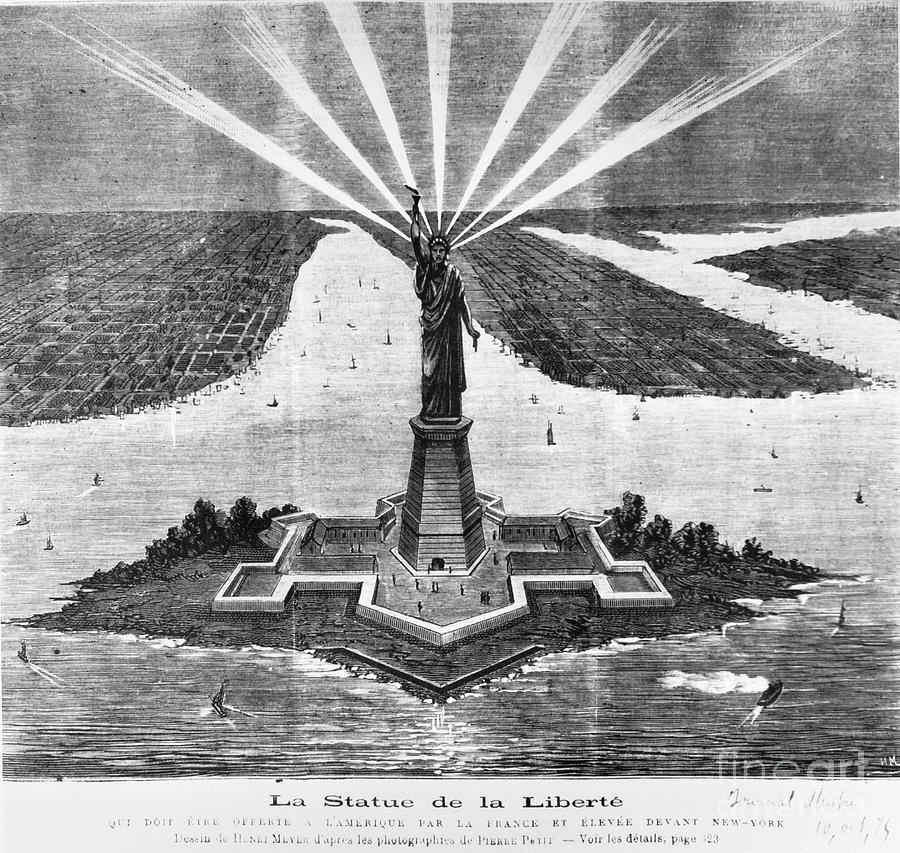
What’s she been hiding? Fort Wood under that toga? A granite lighthouse/pedestal inside the “Star”-fort Wood? A strategic battlement that never saw a day of conflict, never got photographed prior to completion, or recorded well during construction in the entirety of the century of the 1800’s? Unlike like everything else in NYC, one could expect the supposed age of photography to have been on the cutting edge, especially regarding America’s #1 Landmark monument. What they hid from you is a good example of this whole discovering our hidden history, they history mystery that’s being busted wide open. With UAP Channel you have a front seat.


LIBERTY STATE PARK - WE WELCOME THE WORLD TO LIBERTY STATE PARK FOR ITS VIEW AND BEAUTY. WE WELCOME YOU TO WALK ALONG OUR GREAT LIBERTY WALK WAY OVER LOOKING THE HUDSON RIVER, TAKING IN ELLIS ISLAND, THE STATUE OF LIBERTY AND THE NYC SKYLINE. STOP IN AND SEE OUR MAGNIFICENT CENTRAL RAILROAD TERMINAL AND TAKE A FERRY TO ELLIS ISLAND OR VISIT THE STATUE OF LIBERTY. THEN ENJOY THE NEW LIBERTY SCIENCE CENTER. PLEASE EXPLORE THIS WEB PAGE IN DETAIL AND FIND THE MANY HIDDEN SECRETS OF LIBERTY STATE PARK.
  History of
Liberty State Park

The Statue of Liberty and Ellis Island Photos
On the New York Harbor, less than 2,000 feet from the Statue of Liberty, Liberty State Park has served a vital role in the development of New Jersey's metropolitan region and the history of the nation.
During the 19th and early 20th centuries the area that is now Liberty State Park was a major waterfront industrial area with an extensive freight and passenger transportation network. This network became the lifeline of New York City and the harbor area. The heart of this transportation network was the Central Railroad of New Jersey Terminal (CRRNJ), located in the northern portion of the park. The CRRNJ Terminal stands with the Statue of Liberty and Ellis Island to unfold one of this nation's most dramatic stories: the immigration of northern, southern, and eastern Europeans into the United States. After being greeted by the Statue of Liberty and processed at Ellis Island, these immigrants purchased tickets and boarded trains, at the CRRNJ Terminal, that took them to their new homes throughout the United States. The Terminal served these immigrants as the gateway to the realization of their hopes and dreams of a new life in America.
Today, Liberty State Park continues to serve a vital role in the New York Harbor area. As the railroads and industry declined, the land was abandoned and became a desolate dump site. With the development of Liberty State Park came a renaissance of the waterfront. Land with decaying buildings, overgrown tracks and piles of debris was transformed into a modern urban state park. The park was formerly opened on Flag Day, June 14, 1976, as New Jersey's bicentennial gift to the nation. Most of this 1,122 acre park is open space with approximately 300 acres developed for public recreation.
  Selected Views of the Statue of Liberty  From the Collections of the Library of Congress
click on any photo to enlarge
The head of Liberty on display in a Paris park
LC-USZ62-18086
The head of Liberty on display in a Paris park.
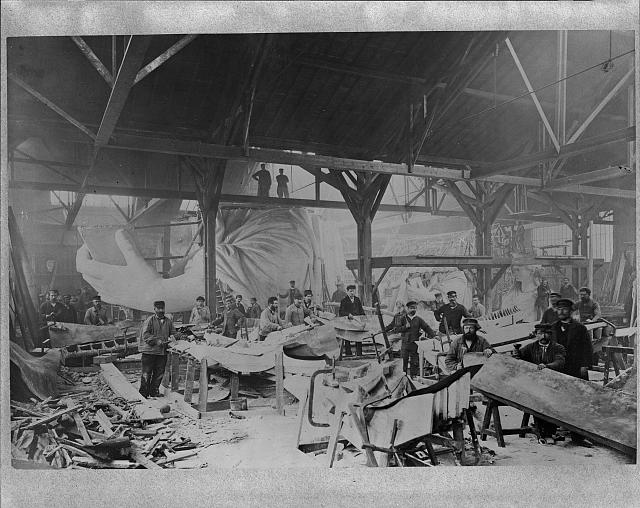
Workmen constructing the Statue of Liberty
LC-USZ62-20113
Workmen constructing the statue
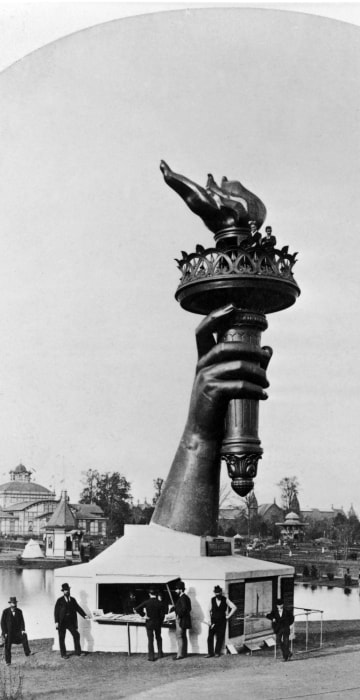
[Statue of Liberty's hand holding the torch]
LC-USZ62-14736
Liberty's hand holding the torch...
Print showing the Statue of Liberty
LC-USZ62-2284
"The Bartholdi Statue..."
Photographic print showing Statue of Liberty enlightening the world
LC-USZ62-1005
Statue of Liberty enlightening the world...
Print showing the Statue of Liberty
LC-USZ62-2040
The great Bartholdi statue...
The gift of France [print showing Statue pf Liberty]
LC-USZ62-49495
"The gift of France ..."
Statue of Liberty [photographic print]
LC-USZ62-40098
Statue of Liberty, N.Y
[Photographic print showing the Statue of Liberty with boats sailing in front]
LC-USZ62-19869
Liberty enlightening the world--Inauguration...
S.S. Normandie arriving in New York Harbor on maiden voyage
LC-USZ62-90162
S.S. Normandie arriving in New York Harbor ...
Statue of Liberty seen from the S.S. Coamo leaving New York
LC-USF33- 021284-M2
Statue of Liberty seen from the S.S. Coamo leaving New York ...
Statue of Liberty at night
LC-USZ62-91295
Statue of Liberty [at night]...


Related image

Image result for statue of liberty oldest picture

Related image

Image result for statue of liberty oldest picture

Related image

Image result for statue of liberty oldest picture


//////


12/24/2018

The Great Tartaria on Connecting The Dots #Mudflood

Remember To Connecting The Dots! ~ BH   Merry Christmas 


Philipp and Richard discuss The Great Tartaria, & Mud Floods on Connecting The Dots. Please leave your comments and ask your questions and we'll get back to you ASAP! #Tartaria #Empire #FEOffensive

Crow, Crown and Ray Bradbury p1 - https://youtu.be/JDst1tIeIHY


Crow, Crown and Ray Bradbury p 2 - https://youtu.be/xSy5ZLmHM8w


Crow, Crown and Ray Bradbury p 3 - https://youtu.be/NUS--_TKAHs


John Thor

Special Thanks to John Thor for the introduction:

Remember To Connecting The Dots! ~ BH   Merry Christmas 


Like share and subscribe Thank you-


//////


12/20/2018

Exploring Elon Musk's Boring TUnnel - stolenhistory.org


There is nothing new Under the Sun ~ BH

Below: a contemporary plan of a tunnel boring machine from the 1880s on an idea by Colonel Frederick Beaumont and Thomas English. The tunnel boring machine was 9 meters (30 ft) long and was driven with compressed air.
Beaumont-tunnelbohrmaschine.jpg

I wanted to start by saying that if you know an Officer serving in the Military Corps of Engineers, ask that Officer to design a machine similar to the one above. If that Officer says that he cannot, let him know that Officer Beaumont, who died in 1899 could, and apparently did.
Frederick Beaumont
1833-1899 

Beaumont's Education
Nothing in the above information suggested that Beaumont could design, and build the below. Unless in the mid-nineteenth century the British Royal Military was producing mechanical engineers of this caliber, there had to be an alternate explanation for such ingenuity. Where is the precursor to this invention? Of course we have this 1868 mining equipment, but it is essentially in the same boat with the machine below. But speaking of Beaumont, where did he gain the knowledge to design the machine of such complexity?
Beaumont-tunnelbohrmaschine_1_1.jpg

Up till this very moment I failed to google out any education related bio information, other than the above Wikipedia bullets. But what I did find, suggests that there is much more than just Beaumont's education, the official history chose to omit.


I honestly start thinking that the entire length of the Second Industrial Revolution (1850-1914) was the process of legitimizing the pre-existing technological achievements. I am opened for ideas on what the 1750-1850 period was used for.

Industrial_Revolution_2.jpg
 

Could the above theory be the reason why no information was ever located pertaining to the below 1908 Gary W. Va. mine machine? Or could it be that they were good to the point where they could go from a pickaxe to this "1908 machine" in one stride without any developmental evidence? We still don't have any info on this mining equipment, by the way.
1908_tractor_1.jpg


1840s-80s Tunneling Machines

1846 Henri-Joseph Maus's Mountain Slicer 
1846 Henri-Joseph Maus Slicer.jpg


1853 Wilson's Tunneling Machine
1853 Wilson Tunneling Machine.jpg

Source

1860s Beach's Tunneling Machine
beach_tunneling_machine_1.jpg

NYC’s first subway was luxurious, pneumatic and built illegally - NY Daily News

1867 Doering & Sachs 
Drilling / Tunneling Machine 
1867-Doering & Sachs Tunnel Machine.jpg

Source

1868 Low's Boring Machine
Low's Rock Boring machine built by E R & F Turner of Ipswich.jpg

rock_boaring_machine_1868.jpg

1868 boring machine, and some other equipment examples + link

1874 Brunton Machine
brunton-machine.jpg

Source

1882 Beaumont Machine
beaumont_tunnel_machine.jpg

Source

The above machines are the ones I found fairly quickly. Pretty sure some extra digging could produce several additional ones. At the same time, I have a strong suspicion that many of those did not make it through time. Interestingly enough, but I have not seen a single photograph of any of the presented machines. What's new, right?

Obviously being able to google this stuff out suggests that none of this is some sort of secret information. Yet, this is definitely not something taught at school. I have hard time imagining that many people comprehend the level of the mid-19th century tech.

I think this technology was re-introduced into the world, which could suggest that we have no idea how old it truly is.

Below is one of the photographs, which I suspect, ended up slipping through the censorship cracks.

*****​
KD: May be the existence of such machines in the past could explain those thousands of miles of underground tunnels located all over the world. Some of them are being called sewers, and some are being used as subways. The hidden meaning behind the existence of these machines in the past, reflected in the current existence of the old tunnels is within the entire infrastructure which had to surround this level of technology. I doubt this technology could materialize out of nothing, and existed by itself, detached from all the other segments of life. Yet, we appear to know nothing about the true state of things back in the day. Hopefully we will get there one day.

The Thames Tunnel was completed in 1843, designed by Isambard Kingdom Brunel and his father Marc. By the way, this is the same Brunel, who allegedly built - The impossible ship: SS Great Eastern a.k.a. Leviathan
Brunel

brunel.jpg
 
1806-1859

The Thames Tunnel
brunel-tunnel-4.jpg

brunel_tunnel_31.jpg

In November 1827 a flamboyant Isambard Kingdom Brunel organised a public relations event under the River Thames. The Tunnel was draped in crimson and long tables were covered in white damask and set with silver and crystal. Fifty guests feasted, lit by decorative candelabra from the Portable Gas Company, and the band of the Coldstream Guards played the National Anthem, 'Rule Britannia', and – for the Duke of Wellington, seated right – 'See the Conquering Hero Comes'.
brunel_tunnel_1.jpg

The Thames Tunnel was fitted out with lighting, roadways and spiral staircases during 1841–1842. An engine house on the Rotherhithe side, which now houses the Brunel Museum, was also constructed to house machinery for draining the tunnel.

Thamestunnelshaft_1.jpg

The tunnel was finally opened to the public on 25 March 1843
brunel_tunnel.jpg

brunel_tunnel_5.jpg

KD: 1820s-1840s for us... just FYI

Man... seriously I am by no means knowledgeable in engieering, machine construction or tunnelling, but come on:

First off, who names their kid "Isambard Kingdom" (sounds like a place in Middle Earth, not a person), but that's not what kills it for me. If you look at the drawing you showed right below the top hat fellow, and specifically the bottom middle panel that seems to show the ongoing construction of the tunnel, are we actually supposed to understand how this supposedly worked? I mean there's just a platform on wheels I guess and then some movable (?) support thing on which 3 or 4 guys just hew away at the hard rock I suppose? And 5 more guys or so carting off rubble and putting the stone/brick panelling in place? So they dug the tunnel completely manually?

Question: The top two drawings do depict the same tunnel as the rest of the old images, right KD? If so, they can't even keep some basic consistency in their supposedly contemporary drawings. I mean first the tunnel is about the height of three men, then look at the lower images where they're dining and marvelling.

Well, forgive my ranting - the million dollar question is "what to make of all of this" besides just pointing out inconsistencies and going nuts over it?
(only in a figurative sense of course ;) )

Anyways, collecting puzzle pieces like this to come ever so slightly closer to the real picture is the best that can be done at this point I guess! And thanks to your (and others) unceasing research, we will, I am convinced. :) Sure as heck is a fascinating endeavour, both to watch and to contribute to!

today
brunel_tunnel_1.jpg
brunel_tunnel_6.jpg
brunel_tunnel_7.jpg

back then
Another proof that there were technologies far superior to the time when they were introduced is the pneumatic tube saga of the 19th century. What we know today as the Hyperloop was used in New York (Beach Pneumatic Transit) in 1867, and in London (Crystal Palace pneumatic railway) in 1864. This information is not a secret, though not too many people are aware of this "ahead of its time" achievement. And here we are, 150 years later, and still not smart enough to implement this technology in the 21st century. Both projects were shut down for various financial reasons, and lack of political backing at the time. But was it really the financial profitability reason, or the brightest minds of the 19th century were simply unable to re-launch a technology which survived the collapse of the previous civilization? The same previous civilization I have been talking about for a while now. The civilization comparable to our level of technical development and in many instances far superior to ours. The civilization which was wiped out, and the one I will attempt to elaborate on in my later posts.

Pneumatic_tube1.png
 
And of course there were some publications and other materials confirming the existence of this technology in the mid-eighteenth century.

pneumatic_hyperloop_trains.jpeg 1024px-Beach_Pneumatic_plan.jpg 78204_original.jpg 78371_original.jpg image100.jpg

The New York City Subway (conventional, what we have today) was introduced in 1904. That is some 37 years after the Beach Pneumatic Transit. And what a contrast it was. Look at the first subway train to carry passengers. It looks exactly the way, one would expect from the 1900s. A little reference for the below images - Riding the NYC Subway

NYC_subway_1904.jpg NYC_subway_1904_1.jpg 
Now let us take a look at what those 1867 pneumatic train cars looked like. Unfortunately not too many photographs made it through time, but a few did. Supplemented by some 19th century wood engravings, it might give you an idea of what a huge step back we took in 1904.

BeachNeumaticTrain1.jpg Pneumatic_tunnel_1.jpg Pneumatic_tube2.jpg Pneumatic_tube3.jpg Pneumatic_tube4.jpg Pneumatic_tube5.jpgNYC_hyperloop.jpg 
And here is what Crystal Palace pneumatic railway train looked like in 1864. Take a note of the similar engravings being different in reality. It does look like different moments in time.

London_hyperloop.jpg London_hyperloop_5.jpg London_hyperloop_3.jpg London_pneumatic_21.png 
Some of the images representing early days of the London Underground in 1863, show a very sharp contrast between the quality of the tunnel and the trains running through them. Judge for yourselves what you see.

London_underground_train_1.jpg London_underground_train_2.jpg 
By the way, comparing 1863 London cars to 1904 New York cars demonstrates, in my opinion, so called chronological shift. I firmly believe that NYC and London photos represent the same time. They are separated by 40 years on the traditional chronological scale, yet look the same. Just like I think that all those Urban Fires, and Earthquakes, separated by years, and decades happened at the same time.

Below are some additional photos from the London Underground system. They demonstrate an obvious technological mismatch between the general knowledge we have about the 19th century, and the supposed achievements and luxuries they actually had. The first engraving represents the portion under the Thames embankment which has been finished.

cross-section-of-the-victoria-embankment.gif technological_mismatch.jpg technological_mismatch_1.jpg towersubway.gif 
Additionally about the city of London in the 1860s: on the first image above you can see two tubes above the tunnel. They run parallel to each other. Those are the pneumatic mail delivery tubes. Today we run delivery trucks, vans and other postal service vehicles. In 1860s they ran a hyperloop to deliver mail.

wills_cigarettes.jpg dispatch_evershot.jpg train_holborn.jpg London_underground_mail_tube_1.jpg London_underground_mail_tube_5.jpg London_underground_mail_tube_6.jpgLondon_underground_mail_tube_7.jpg 
Judging by the image below, there could have been a similar system in the United States.

US_pmneumatic _mail.jpg 

And, of course, this is how all these tunnels were built. Of course after 6 years of digging with $80,000,000 Bertha tunnel-boring machine, Seattle is still not done with its downtown tunnel. But in 1860s they did it with... what exactly, a wheelbarrow and a shovel?

London_tube_construction_1.jpg London_tube_construction.jpg NYC-HYPERLOOP.png iron_tube_for_the_Waterloo_and_Whitehall_Pnumatic_Railway.png 
The below photo is very indicative of the way the vast majority of the so called 19th century "building process" photographs look like. To me it looks like they found a tunnel and trying to dig it out with whatever tools they have. There is no building process. The "new" construction looks like and old iron and brick structure. Yet it is described as:


//////